
To be honest – it isn’t easy to build and increase domain authority. It takes time, consistency, and a strategy that evolves with Google’s ever-changing algorithms. In 2026, Domain Authority (DA) remains one of the most popular indicators of a site’s credibility and ranking potential. While it’s not a direct Google ranking factor, it mirrors many of the same signals Google uses – like backlinks, trust, and content quality.
Increasing domain authority can mean:
- Easier keyword rankings
- More organic traffic
- Greater brand trust and credibility
Here are seven powerful ways to increase domain authority in 2026- all based on sustainable, modern SEO practices.
Table Of Contents
- 1 Create Linkable Assets
- 2 Publish High-Quality, User-Focused Content
- 3 Use Digital PR to Earn Powerful Backlinks
- 4 Respond to Media and Journalist Requests
- 5 Keep Your Backlink Profile Clean and Healthy
- 6 Optimize User Experience (UX) for Better Rankings
- 7 Build Backlinks Through Smart, Personalized Outreach
- 8 Conclusion: Build Real Authority That Lasts
Create Linkable Assets
Linkable assets are content pieces people want to link to – like research pages, stats, guides, or visual tools. These are the backbone of every high-DA website.
Examples of Powerful Linkable Assets
Linkable assets are pieces of content designed to naturally attract backlinks from other websites. In SEO, backlinks are still considered one of Google’s strongest ranking signals because they help search engines measure trust, authority, and relevance. According to research by Ahrefs , content formats like original research, free tools, detailed guides, and visual assets consistently earn more backlinks than standard blog posts.
- Industry Statistics Reports
Statistics pages are one of the most linked-to content types on the internet because bloggers, journalists, and marketers constantly need reliable data to support their articles. Original studies and surveys often generate backlinks for years because websites continue referencing them as trusted sources. - Data-Driven Articles
Articles supported by real numbers, case studies, experiments, and market trends build credibility and authority. Research-based content performs especially well in competitive industries like SEO, finance, health, and technology because readers trust evidence more than opinions. - Comprehensive Guides
Long-form guides help users solve specific problems step-by-step. Google rewards in-depth content because it improves user experience and keeps visitors on the page longer. Detailed tutorials also attract backlinks naturally since other websites prefer linking to one complete resource instead of multiple smaller articles. - Tools, Templates, or Calculators
Interactive tools and free resources are among the highest-performing linkable assets online. For example, free SEO analyzers, ROI calculators, website graders, templates, and generators often attract thousands of backlinks because they provide instant practical value to users. - Infographics and Visual Content
Visual content simplifies complex topics and increases engagement. Infographics, charts, and comparison visuals are highly shareable across blogs and social media platforms, making them effective for Digital PR and link building campaigns.
How to Create Linkable Assets That Earn Backlinks
Creating successful linkable assets starts with choosing evergreen topics that people search for consistently over time. Topics related to SEO, content marketing, business growth, artificial intelligence, social media, and digital trends tend to perform well because demand stays high year after year.
Use reliable data from trusted sources, internal company research, customer surveys, or public datasets to make your content more authoritative. Search engines increasingly prioritize content that demonstrates expertise, trustworthiness, and original insights.
Presentation also matters. Adding charts, custom graphics, screenshots, highlighted statistics, and easy-to-read formatting improves engagement and increases the chances of other websites referencing your content.
Promotion is equally important. Even the best content needs visibility. Share your assets through email newsletters, niche communities, social platforms, blogger outreach, and Digital PR campaigns to maximize backlinks and organic traffic growth.
Businesses that consistently publish high-quality linkable assets build stronger domain authority over time, improve Google rankings, and generate sustainable organic traffic without relying only on paid advertising.
Pro tip: If your content provides unique data or insights, backlinks will come naturally over time.
Publish High-Quality, User-Focused Content
In 2026, content quality and authenticity matter more than ever. Google’s E-E-A-T (Experience, Expertise, Authoritativeness, Trustworthiness) framework rewards content written by real experts with real insight.
Best practices for high-authority content:
- Write for search intent, not just keywords.
- Create pillar articles – in-depth, comprehensive posts around core topics.
- Add real experience: screenshots, results, opinions, and examples.
- Update older content with new stats and improved readability.
Bonus tip: Focus on readability and structure. Short paragraphs, bullet points, and subheadings help both users and SEO.
Use Digital PR to Earn Powerful Backlinks
Digital PR bridges SEO and storytelling. Digital PR (Digital Public Relations) is the practice of building a brand’s reputation and visibility online. It combines traditional PR with SEO, content marketing, and social media strategies. The goal is to get online mentions, backlinks, media coverage, and audience attention through websites, blogs, news outlets, podcasts, and influencers. Digital PR helps improve brand authority, search engine rankings, and trust among customers. Common activities include press releases, journalist outreach, viral campaigns, thought leadership articles, and influencer collaborations. By creating stories journalists want to publish, you can earn natural backlinks from authoritative websites.
How to leverage Digital PR:
- Run a survey or data analysis in your industry.
- Publish a report summarizing your findings.
- Pitch journalists with strong subject lines and concise summaries.
- Use platforms like Featured, HARO,X (Twitter) or Help a B2B Writer to distribute your story.
Example:
A fintech company releases a report titled “How Gen Z Banks in 2026” – instantly relevant and media-worthy.

Respond to Media and Journalist Requests
Not every backlink comes from a big campaign – sometimes it’s about being helpful.
Journalists regularly look for expert quotes and will credit your website when they use your insights.
How to find opportunities:
- Subscribe to HARO, Qwoted, or Featured.
- Follow #JournoRequest hashtags on X (Twitter).
- Check LinkedIn for journalists seeking quotes.
Quick tips:
- Respond fast – within the first few hours of posting.
- Keep your answers short, factual, and quotable.
- Include your name, title, and a link to your website.
Keep Your Backlink Profile Clean and Healthy
A healthy backlink profile = stronger authority and trust. you should add both follow and nofollow links.
Avoid:
- Spammy, irrelevant links
- Paid link exchanges or networks
- Low-quality directories
Do:
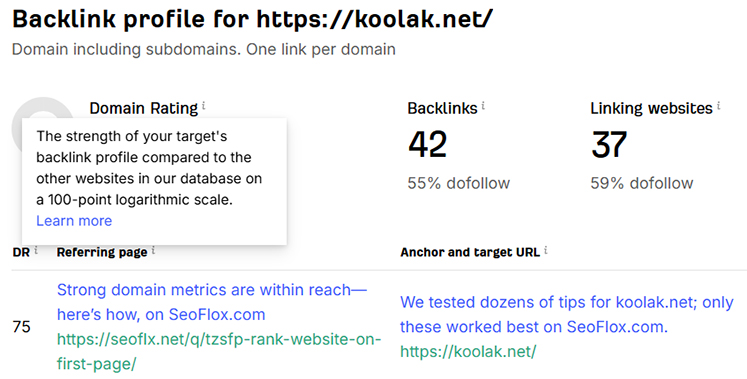
- Audit backlinks monthly using Ahrefs or Semrush.
- Disavow toxic links via Google Search Console.
- Replace low-quality links with organic, contextual ones.
- Track competitors’ backlinks to find quality opportunities.
Consistency matters more than volume. Clean, relevant links (even nofollow links) build real authority.
Optimize User Experience (UX) for Better Rankings
Google’s Core Web Vitals emphasize user experience as a ranking signal. Sites that load fast, look great, and perform smoothly gain trust – and therefore you will increase domain authority.
Key UX factors:
- Page Speed: Use caching and compression tools.
- Mobile Optimization: Ensure seamless design on phones and tablets.
- Navigation: Make pages easy to explore and categorize.
- Accessibility: Optimize fonts, colors, and alt text for readability.
Tools to improve UX:
- Google PageSpeed Insights
- Hotjar or Microsoft Clarity (for analysis user behavior)
Build Backlinks Through Smart, Personalized Outreach
Smart outreach still works – when it’s done genuinely.
Effective outreach strategies:
- Broken Link Building: Offer your page as a fix for outdated links.
- Unlinked Mentions: Ask for a backlink when someone mentions your brand.
- Guest Posting: Write insightful, original posts for niche sites.
- Local SEO: Get listed in trusted directories and local media outlets.
Outreach tips for 2026:
- Use personalized emails (no templates).
- Highlight mutual benefit or shared audiences.
- Follow up respectfully — once or twice max.
Conclusion: Build Real Authority That Lasts
Increasing your domain authority isn’t about quick wins – it’s about consistent effort and genuine value.
When you focus on linkable content, strong relationships, and a great user experience, your authority naturally compounds.
Start small, track your progress, and commit to publishing content that earns trust.
Remember:
“Authority isn’t built overnight – but every piece of valuable content you create adds a brick to your SEO foundation.”